Search for 'Coir Brushes'

7 mins
2026-06-02
0
0
Copy Link
Climate change is no longer a distant forecast. It is the weather you woke up to this morning.
In 2026, the conversation has shifted from "will it get worse" to "how much worse, how fast." Scientists are no longer arguing about whether the 1.5°C threshold will be breached. They are now tracking how long we overshoot it and what that means for billions of people who had little to do with causing it.
For India, this is not abstract. In May 2026, 97 of the world's 100 hottest cities were located inside our borders. Glaciers that feed our rivers are retreating faster than at any point in recorded history. Monsoons are growing more unpredictable. And the communities least equipped to cope are the ones hit first.
This blog is a clear-eyed look at the state of the climate in 2026, what is driving it, what India is facing, where genuine progress is happening, and what each of us can do about it.
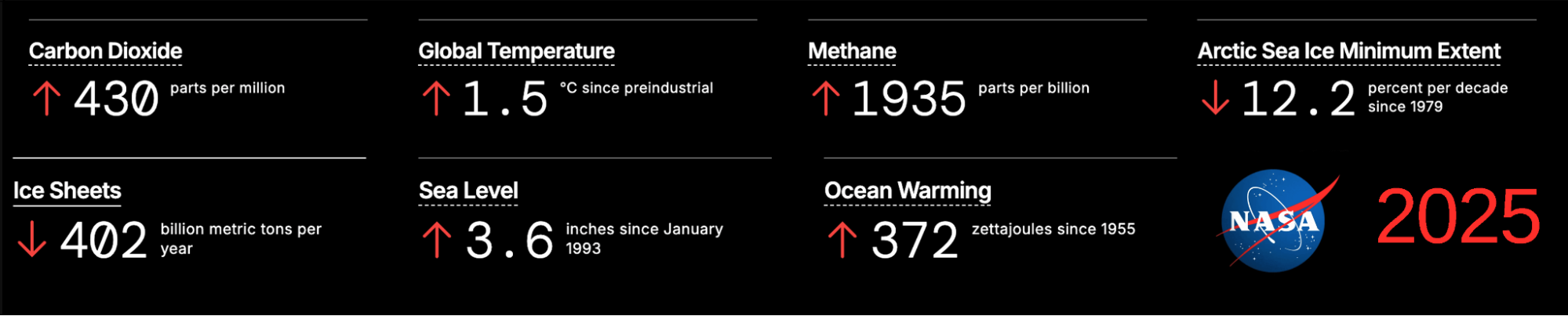
The numbers tell the story faster than any summary can. Here is where things stand, according to reports published between January and May 2026:
Every fraction of a degree matters. Even small increases in temperature intensify heatwaves, extreme rainfall, droughts, ice loss, and sea level rise simultaneously. There is no "safe" version of 1.6°C.
The UN Environment Programme's Emissions Gap Report 2025 found that current national climate pledges will allow temperatures to rise by 2.3–2.5°C this century. Business-as-usual policies put us on track for 2.8°C.
The causes are well understood. The response remains far too slow.
Coal, oil, and gas combustion accounts for the vast majority of global CO₂ emissions. Despite years of climate commitments, fossil fuel production reached record levels in 2023. The 2026 Doomsday Clock Statement notes that no UN climate summit in the past three years has firmly endorsed phasing out fossil fuels or monitoring emissions.
An Oxfam report from January 2026 found that the richest 1% of the global population exhausted their entire annual carbon budget in just ten days. The communities most affected by climate change contribute the least to it.
The UN Global Forest Goals Report 2026 shows that despite targets, deforestation continues at a pace that undermines progress on reducing industrial emissions. Forests absorb CO₂; losing them removes both carbon storage and biodiversity.
Warmer oceans intensify tropical storms, bleach coral reefs, raise sea levels through thermal expansion, and disrupt fisheries. Ocean heat content reached a new record for nine consecutive years through 2025. Once stored, ocean heat takes decades to dissipate even if emissions were halted today.
The Climate Risk Index 2026 published by Germanwatch places India ninth among the most climate-affected countries globally. Over the past three decades, India has experienced more than 430 extreme weather events, with over 80,000 deaths and economic losses exceeding USD 4.5 trillion recorded worldwide.
According to Down to Earth's State of Environment 2026, the Indian landmass warmed by nearly 0.9°C during 2015–2024 compared to the early 20th century baseline. Parts of north India are warming as fast as 0.2°C per decade.
In May 2026, 97 of the world's 100 hottest cities were in India. Balangir in Odisha recorded 48°C. Sasaram and Varanasi followed closely. The northern and eastern belt, including Rajasthan, Bihar, Uttar Pradesh, and Odisha, bore the worst of it.
The India Meteorological Department forecast above-normal heatwave conditions between April and June 2026, with some regions expected to experience two to eight heatwave days. Outdoor workers, farmers, the elderly, and children are most at risk.
A CEEW study found that relative humidity across North India and the Indo-Gangetic Plains has risen by up to 10% over the last decade. When the air is saturated with moisture, sweating cannot cool the body efficiently, sharply increasing the risk of heatstroke and organ failure.
💡 Recommended Read: Building personal habits that lower your footprint matters even more during a warming crisis. Read our guide: Top 12 Eco-Friendly Habits to Build in 2026.
India's dependency on the monsoon system makes it uniquely vulnerable to climate variability. Delayed, compressed, or intensified monsoons disrupt agriculture, drinking water supply, and flood risk simultaneously. What was once a predictable season has become a high-stakes variable each year.
Himalayan glaciers supply water to more than a billion people across the Indus, Ganga, and Brahmaputra river basins. Accelerated glacial melt raises short-term flood risk while threatening long-term water security for entire regions. Glacial lake outburst floods (GLOFs) are a specific and growing threat to Himalayan communities.
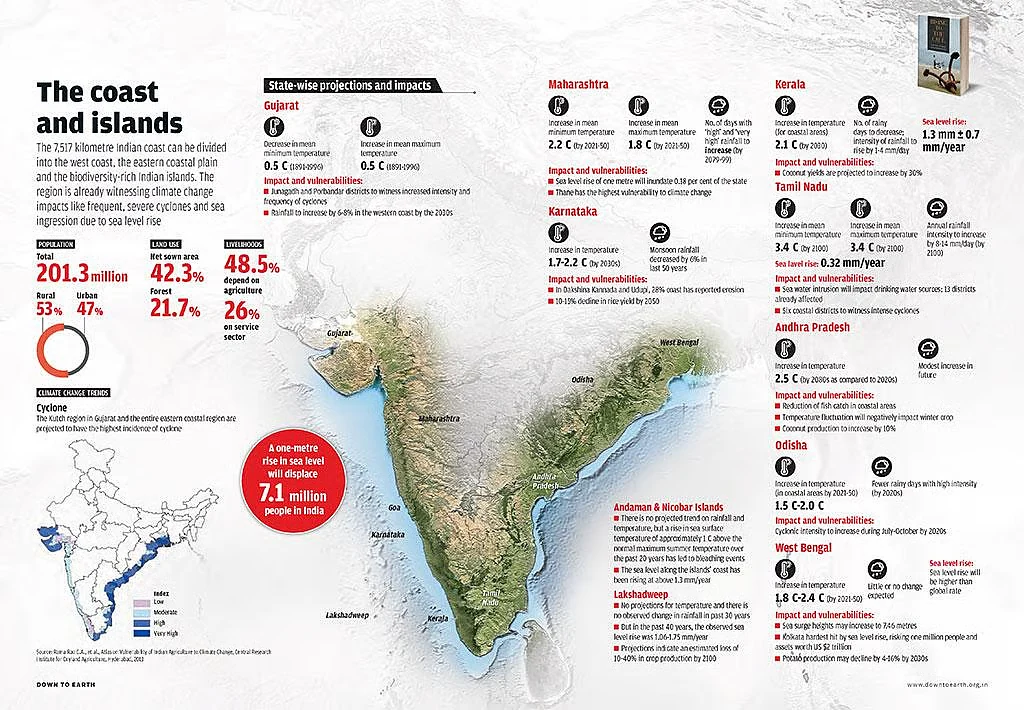
India's coastline stretches over 7,500 km. Rising seas, combined with more intense cyclones, threaten low-lying coastal communities, infrastructure, and agricultural land. The Sundarbans delta, home to millions, is among the most vulnerable regions on Earth.
The picture is not entirely bleak. Some of the most important climate shifts of recent years have gone underreported:
Progress is real. But it is not yet fast enough to close the emissions gap.
A few terms that appear frequently in climate reporting, explained simply:
The scale of the climate crisis can make individual action feel pointless. It is not. Consumer choices drive market signals, household emissions are significant in aggregate, and social norms around consumption are shaped by what people around you actually do.
India generates an enormous volume of plastic waste, much of it from packaging and disposable products. Switching to reusable alternatives eliminates the most avoidable category of plastic pollution. Every reusable bag, bottle, and container is a disposable that never has to exist.
The personal care and household products you use every day add up. Bamboo toothbrushes, solid shampoo bars, natural cleaning products, and reusable period care collectively reduce plastic waste, chemical runoff, and packaging emissions. One swap compounds into many over a year.
📖 Read Swaps Guide: For a practical, swap-by-swap guide to changing your daily routine, read: What Makes Women Stronger: 10 Everyday Eco Swaps.
Food production accounts for roughly a quarter of global greenhouse gas emissions. Eating more plant-based meals, reducing food waste, and buying local and seasonal produce are the highest-impact food choices most people can make.
Switching to LED lighting, reducing AC usage by a couple of degrees, choosing energy-efficient appliances, and air-drying clothes instead of machine-drying are unglamorous but genuinely effective household habits.
Transportation is one of the largest sources of personal carbon emissions. Choosing trains over flights, walking or cycling locally, and using public transport over private cabs all matter at scale.
✈️ Travel Tips: Planning a trip? Read our detailed travel guide: Sustainable Travel Tips: How to Explore the World Without Trashing It.
Choose products with transparent sustainability claims and verified certifications. Not sure where to start? Read: How to Get Started on Your Sustainability Journey.
Want to avoid greenwashing when shopping eco-friendly? Read: The Ultimate Guide to Eco-Friendly Shopping.
Changing habits is easier when you have the right tools. These are practical replacements for disposable products most people already use every day:
Ecoyaan AI-verifies every product on its platform for honesty in sustainability disclosures, with material claims and certifications listed on every product page. Explore eco-friendly products on Ecoyaan.

Climate change in 2026 is not a future threat. It is a present-tense reality that is reshaping where we can live, what we can grow, and how safely we can simply go outside in summer.
India is on the front lines. But it is also a country with enormous capacity for action: a growing renewable energy sector, a culture already built around reuse and repurposing, and a generation of consumers who are beginning to vote with their wallets.
The gap between where we are and where we need to be is real. So is the evidence that individual action, when it scales, moves markets and shifts norms. Start with curiosity, not perfection. Pick one swap this week. Tell a friend. Come back for the next one.
5 mins • 2026-05-20

6 mins • 2026-04-18

6 mins • 2026-03-31

5 mins • 2026-01-23

5 mins • 2026-01-21

4 mins • 2025-12-18
0
0
Copy Link
to write a comment.