1. Overview
Travel is one of life's best things. But it is also one of the most resource-intensive habits most of us have.
A single long-haul flight can generate more carbon than months of everyday choices combined. Hotels burn through single-use plastics at scale. And tourist hotspots are increasingly struggling with the weight of over-tourism.
The good news? Sustainable travel is not about giving up trips. It is about making smarter ones. Small, intentional choices at every stage of your journey add up to a much lighter footprint — and often a much richer experience.
This guide covers practical, realistic tips you can use whether you are planning a weekend getaway or a two-week trip abroad.
2. Why Sustainable Travel Matters Now
According to a 2024 study published in Nature Communications, global tourism emissions grew 3.5% per year between 2009 and 2019 — more than double the growth rate of the global economy — reaching approximately 8.8% of total global greenhouse gas emissions by 2019.
But beyond carbon, there is a bigger picture. Overtourism is damaging ecosystems, straining local water supplies, and pricing out residents in popular destinations. Single-use plastics from travelers pile up on beaches, in forests, and in rivers nowhere near a recycling facility.
Choosing to travel more consciously is not just about your footprint. It is about keeping the places you love worth visiting.
The World Travel and Tourism Council's Environmental and Social Research 2025 shows that the sector's carbon footprint actually fell by 9.3% since 2019, even as economic output grew — proof that lower-impact travel is achievable at scale.
3. Before You Leave: Plan with Intention
The most impactful sustainable travel decisions happen before you even pack.
- Choose slower travel over more trips. Two longer trips a year have a significantly lower carbon footprint than five short ones. Flying less, and staying longer when you do, is one of the highest-impact shifts you can make.
- Travel by train or bus when possible. According to Sustainable Travel International, transportation is tourism's main source of greenhouse gas emissions, with planes and cars generating the most CO₂ per passenger mile. Trains come in well behind. In India, Southeast Asia, and Europe, trains are often faster door-to-door once you account for airport time.
- Pick eco-conscious accommodation. Look for stays with credible certifications like Green Key, LEED, or EarthCheck, or choose locally owned guesthouses that reinvest in the community. Avoid large resort chains in ecologically sensitive areas.
- Pack light. Heavier planes burn more fuel. A lighter bag also means skipping check-in, which cuts your travel time and reduces baggage-handling emissions at scale.
4. What to Pack: Your Sustainable Travel Kit
What you bring determines how much waste you create on the road. A low-waste travel kit does not have to be complicated.
4.1 Reusable Water Bottle
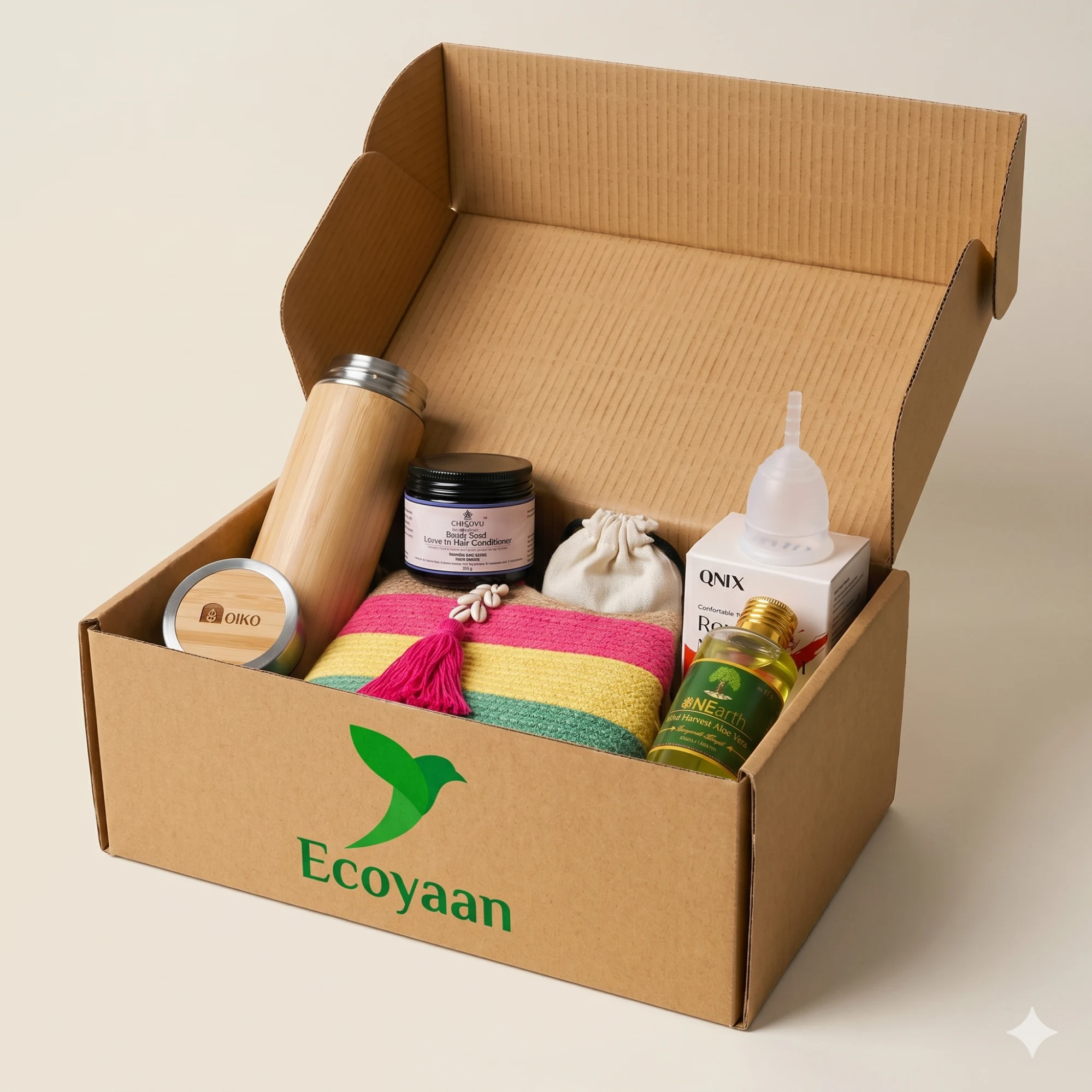
Pick up a reusable water bottle from Ecoyaan to skip single-use plastic at airports and tourist spots. A reusable travel mug handles your morning coffee on the go. These two swaps alone can eliminate dozens of plastic bottles per trip.
A single plastic bottle is used for an average of 12 minutes but takes over 500 years to decompose.
4.2 Solid Shampoo & Conditioner Bars
Pack solid shampoo and conditioner bars from Ecoyaan's hair care collection to skip the tiny plastic hotel bottles entirely. They are TSA-friendly, last longer than liquid formats, and take up almost no space in your bag.
4.3 Jute or Cotton Tote Bag
A jute or cotton tote bag is one of the most versatile things you can carry. Use it for markets, groceries, beach days, and spontaneous shopping. Folds flat, weighs almost nothing.
4.4 Menstrual Cup
If you menstruate, a menstrual cup is one of the best travel companions you can carry. No hunting for specific brands in unfamiliar places, no waste, and it can be worn for up to 12 hours — ideal for long travel days.
4.5 Reusable Personal Care Products
Bamboo or metal cutlery sets and reusable personal care products from Ecoyaan round out a kit you pack once and use on every trip after. Each item verified for transparency and sustainability claims.
5. On the Ground: How You Travel Matters
Getting to your destination is only part of the picture. How you move around once you are there counts too.
- Walk or cycle whenever you can. Most city centres and tourist areas are more enjoyable on foot. You notice things you would miss from a car window.
- Use public transport or shared rides. Metros, local buses, and auto-rickshaws in Indian cities are significantly lower-emission than private taxis or rental cars.
- Eat local and seasonal. Street food and local restaurants support the community economy and have a far lower food-mile footprint than international chains. A thali in Rajasthan beats an airport sandwich on every level.
- Avoid renting a car unless you genuinely need one. If you do rent, choose an electric or hybrid option where available.
6. At Your Stay: Reduce Without the Effort
You do not have to be inconvenienced to be sustainable in a hotel or guesthouse. A few frictionless habits:
- Reuse your towels. Most hotels offer this now. It saves laundry water and energy without any effort on your part.
- Turn off AC, lights, and the TV when you leave the room. Simple, but most people do not do it.
- Skip daily room cleaning to cut water use, chemical use, and the morning shuffle of your things.
- Decline miniature toiletries. Bring your own solid bars and leave the plastic bottles behind.
- Dispose of waste properly. If recycling infrastructure exists locally, use it. If not, carry your recyclables until you find a facility.
7. Supporting Local: The Ethical Side of Travel
Sustainable travel is as much about people as it is about carbon.
- Buy from local artisans and vendors, not chain souvenir shops. The money stays in the community and you go home with something actually unique.
- Respect wildlife and natural habitats. Avoid sanctuaries or experiences that exploit animals. Ethical wildlife tourism means observing from a distance in natural settings.
- Be mindful of water use in water-scarce destinations. Long showers and daily linen changes are luxuries that cost communities more than they cost you.
- Ask before you photograph. People and sacred spaces are not content for your feed.
8. Offsetting What You Cannot Avoid
Sometimes flying is unavoidable. That is reality. Carbon offsetting is not a perfect solution, but it is a meaningful step when used honestly.
Look for programs verified by Gold Standard or Verra's Verified Carbon Standard (VCS) that fund concrete projects: forest conservation, clean cookstove distribution, or renewable energy in underserved regions.
Avoid offset schemes that are vague about where funds go. Use offsetting as a last resort, not as permission to fly more.
9. How to Make Sustainable Travel a Habit (Not a Chore)
The biggest barrier to sustainable travel is not cost or availability. It is friction. The easiest way to reduce that friction is to build your travel kit once and keep it ready. Same bottle, same soap bar, same tote. You stop making decisions every time you pack, and the habits become automatic.
Start with one change on your next trip. Bring a reusable bottle. Take the train for a short route. Stay at a locally owned guesthouse.
One intentional choice per trip compounds over time into a genuinely different kind of traveler.
Not sure where to start? Browse Ecoyaan's verified eco-friendly products at ecoyaan.com — with transparent material claims and certifications on every product page.
10. Quick Sustainable Travel Checklist
🌍 While You Are There
- ✅ Walk, cycle, or use public transport
- ✅ Eat at local restaurants and street stalls
- ✅ Conserve water and energy at your stay
- ✅ Buy from local vendors and artisans
✈️ When You Are Back
- ✅ Offset unavoidable flight emissions via a Gold Standard or VCS-certified program
- ✅ Refine your kit for next time based on what worked
11. Final Thoughts
Sustainable travel is not a sacrifice. It is a different way of paying attention. The trips that leave the deepest impressions are the ones where you slowed down, ate where the locals eat, wandered without a plan, and left the place roughly as you found it.
Your choices as a traveler shape the places you visit. That is not a burden — it is a quiet kind of power.
Travel well. Travel lightly. And come back changed.
Read more sustainability guides at ecoyaan.com/blogs.
12. Sources
- Sun, Y.-Y. et al. Drivers of global tourism carbon emissions. Nature Communications, 2024. Read here
- World Travel and Tourism Council. Environmental and Social Research 2025. Read here
- World Economic Forum. Travel and Tourism Industry: Net Zero. Read here
- Sustainable Travel International. Carbon Footprint of Tourism. Read here
- Gold Standard Foundation. goldstandard.org
- Verra Verified Carbon Standard. verra.org
13. FAQs
- Is sustainable travel more expensive?
Not necessarily. Trains are often cheaper than flights. Local food costs less than tourist restaurants. Reusable gear like a water bottle or tote is a one-time purchase that pays for itself within a single trip. - What is the single highest-impact change I can make?
Fly less. Replacing even one short-haul flight with a train journey cuts emissions significantly compared to any product swap. - Can I offset my flight's carbon?
Yes, but choose carefully. Look for Gold Standard or VCS-certified programs that fund concrete, verifiable projects. Offsetting is a supplement, not a substitute for flying less. - What is overtourism, and should I avoid popular destinations?
Overtourism refers to destinations where visitor numbers strain local infrastructure, housing, and ecosystems. You do not need to avoid them entirely, but travel off-peak, stay longer, and spend money locally rather than in international chains. - Are eco-hotels worth it?
Certified ones, yes. Look for Green Key, LEED, or EarthCheck certifications. Or choose locally owned guesthouses, which often have a naturally lighter footprint. - Are reusable period products really practical for travel?
Absolutely. A menstrual cup lasts up to 12 hours per use, requires no carrying of extras, and is far easier to manage across time zones and transport days than disposable alternatives. - Where can I find eco-friendly travel products in India?
Ecoyaan stocks a curated range of verified eco-friendly travel essentials, from reusable water bottles and tote bags to solid hair care bars and personal hygiene products. Every product listing includes material disclosures and sustainability certifications.