Search for 'Coir Brushes'

5 mins
2024-09-05
0
0
Copy Link
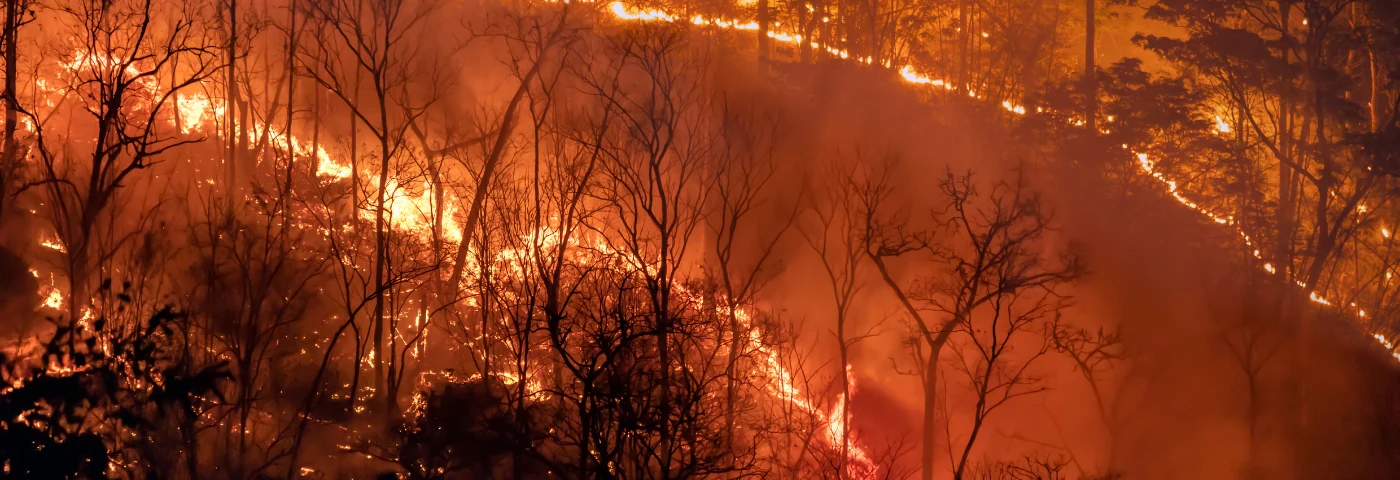
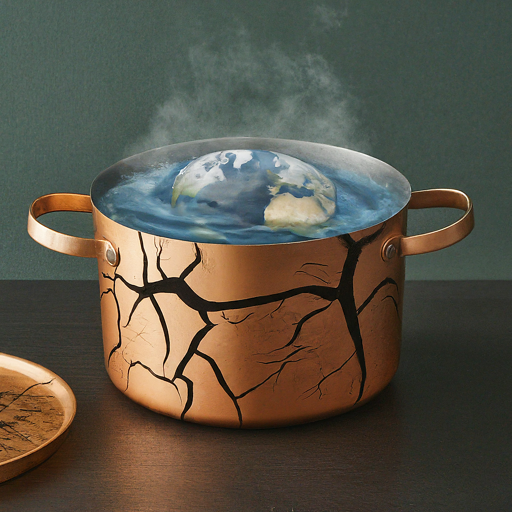
Boiling frog syndrome is a metaphor that describes our tendency to not react to slow, gradual negative changes. The idea comes from a fable about a frog in a pot of water - if the frog is thrown into boiling water, it will immediately jump out. But, if placed in lukewarm water that's slowly heated, the frog will adapt to the increasing temperature until it's too late to escape. It is a very apt, albeit disturbing, analogy for our collective inability to deal with the ongoing climate crisis. Temperature and rainfall patterns are slowly becoming more extreme and more unpredictable with each passing year, but climate action is severely lagging behind the levels required to prevent a global catastrophe. For many of us, it's difficult to imagine the perils facing us over the next few decades. In today's article, we want you to visualise what life on Earth may look like if we don't change the status quo.

Our ancestors' ability to grow food reliably is the main reason you and I are here. It is now 2040 and the world continues to be fixated on driving up the yield of a handful of crops like wheat, rice, corn and soybean. Synthetic fertiliser usage has increased even more compared to the already elevated levels seen in the early 21st century; but the productivity on our farms continues to fall due to worsening weather patterns. The run-off of excess fertilisers into rivers and streams is choking life underwater, threatening food supply for millions of people. Nitrous oxide, a greenhouse gas that can trap 300 times more heat than CO2, is being emitted in record quantities as excess nitrogen fertilisers on our croplands react with oxygen in the atmosphere. Bleaching of coral reefs has reached all time highs, impacting the fish population and taking away a key protein source for billions of people.
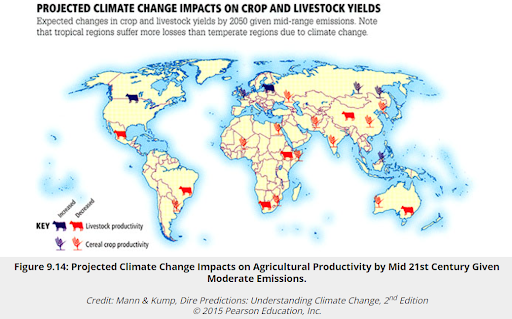
The deforestation in the tropical rainforests in Brazil and Indonesia has increased further to feed the growing global population, turning these key carbon sinks into net carbon sources. Climate change has also changed agricultural productivity around the world; colder regions are now more suitable for growing food compared to tropical nations. As a result, countries in the global south are forced to import food from the already developed western countries that are benefiting from a more temperate climate due to climate change (see illustration above), further increasing income inequality around the globe.
It is 2080 now. Global warming has crossed 2.5degC above pre-industrial levels. As temperatures continue to soar globally, more and more people now live in urban, concrete jungles with no connection to the natural world. Most of us travel from home to office in tunnels, never exposing ourselves to the harsh sun outside.

Lower and middle-income families struggle to cool their homes despite owning air conditioners, due to the frequent electricity outages that resurfaced in the mid-21st century due to the astronomical energy needs of our society. Renewable energy, despite the exponential ramp in the 2020s, stalled in the 40s due to the scarcity of lithium-ion batteries that are required for storing green energy in the power grid. You can read about the human rights and emissions-related issues of producing Li-ion batteries in our previous article here. The reliance on oil from Middle-east countries continues to this day and has only grown in recent decades.
The majority of pharmaceutical drugs were once made using natural sources like herbs and plants. Today, in the early 2100s, rapid global warming has caused widespread shortages in life-saving medicines. Heat-induced diseases are rampant, especially for the youngest and oldest members of our society. People live even more sedentary lives compared to the 21st century, causing diabetes and obesity to skyrocket. Widespread adoption of AI tools and online/virtual experiences have exasperated the obesity epidemic further. The 21st century was also marred by three separate respiratory pandemics, as rampant deforestation increased human contact with zoonotic viruses living in our forests. The slow decline in our collective health has broadly gone unnoticed by the public.
It is now 2100 and as predicted back in 2023, glaciers in the Hindu Kush region of the Himalayan mountain range have been melting rapidly and currently hold only 20% of the ice compared to the early 21st century. This has affected a critical water source for the majority of Indians living in the northern plains. Water is now rationed for families in most Indian metropolitan cities, to avoid the kinds of water shortages seen a few decades ago.
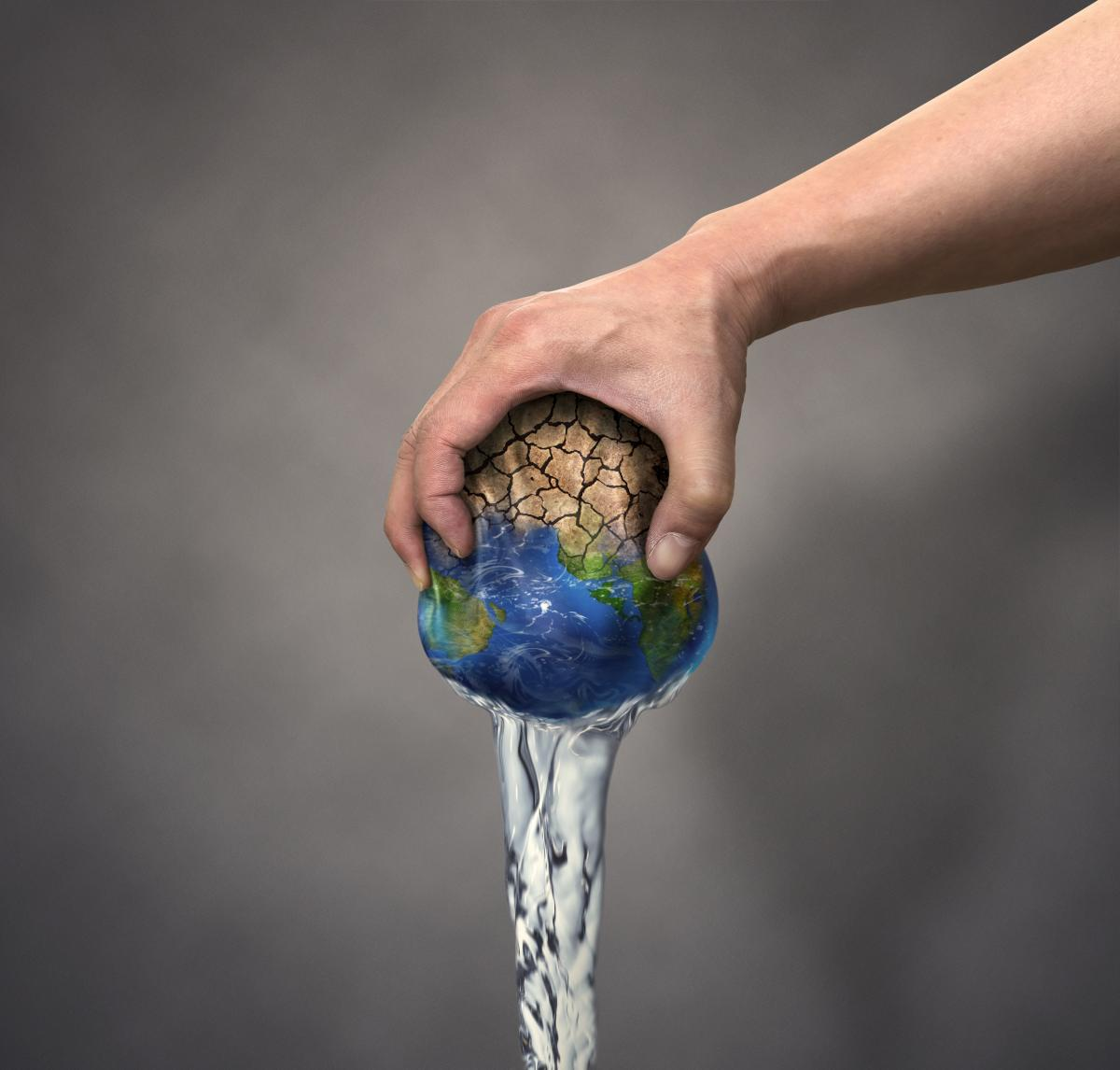
The economic impact of global warming was grossly underestimated by researchers back in the early 21st century. Today, in 2124, 10% of the global GDP is spent on dealing with natural disasters caused by climate change. Moreover, every year, economic activity grinds to a halt in peak summer months as it becomes impossible to do any manual labour in such inhumane conditions, further impacting our economy. Rising sea levels have forced people away from coastal regions, further impacting the once thriving ocean economy. World leaders continue to measure their country's success using GDP, despite spending a majority of that GDP dealing with the effects of climate change. Even though world GDP has improved in the 22nd century, the average salary around the world has stayed relatively flat. Standard of living and the happiness index continue to fall around the world.
Sounds scary, doesn't it? There are even more wide ranging effects of climate change like wars/conflicts, biodiversity loss and human rights issues that we did not talk about in this article. Thankfully, it is only 2024 right now. Scientists have concluded that we still have a narrow window of 10-20 years to avoid the dystopian future described in this article. If we don't start treating the planet with more respect, it could become inhospitable for supporting life.Our planet is boiling ever so slowly. Unlike the poor frog in our analogy above, we have the ability to dial down the temperature around us. Time to act is now. Follow us at Ecoyaan to learn how.
7 mins • 2026-06-02
5 mins • 2026-05-20

6 mins • 2026-04-18

6 mins • 2026-03-31

5 mins • 2026-01-23
5 mins • 2026-01-21
0
0
Copy Link
to write a comment.