Search for 'Coir Brushes'

4 mins
2025-04-14
0
0
Copy Link
Though the terms are used interchangeably, they are indeed different.
Global warming specifically refers to the observed long-term increase in Earth's average surface temperature. This temperature rise is primarily driven by human activities that increase atmospheric concentrations of greenhouse gases such as carbon dioxide (CO₂), methane (CH₄), and nitrous oxide (N₂O). These gases enhance the natural greenhouse effect, trapping more heat in Earth's atmosphere.
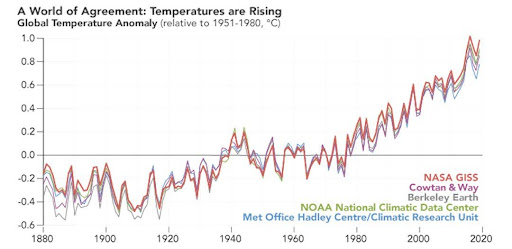
According to the Intergovernmental Panel on Climate Change (IPCC), the planet's average temperature has increased by approximately 1.1°C (2°F) since the pre-industrial era. The main contributor to this warming is the burning of fossil fuels, which releases significant amounts of greenhouse gases.
Climate change encompasses a wider range of environmental transformations that result from the warming of our planet. While rising global temperatures are the primary driver, climate change manifests in various ways across Earth's systems, including:
As Barack Obama noted: "Climate change is no longer some far-off problem; it is happening here, it is happening now."
To clarify the relationship between these terms, global warming is the primary cause, while climate change encompasses the broader set of effects.
Think of it this way: Global warming is the specific process of increasing global temperatures, while climate change refers to the full range of environmental changes triggered by this warming. Global warming is the underlying mechanism, while climate change represents the diverse consequences we observe throughout Earth's systems.
Understanding the difference between these terms is important for several reasons:
Global warming and climate change are not interchangeable terms. Global warming refers specifically to the increase in Earth's average temperature, while climate change encompasses the broader set of environmental transformations that result from this warming.
By understanding this cause-and-effect relationship, we can better comprehend both the urgency and complexity of our environmental challenges. Addressing global warming through reduced greenhouse gas emissions remains our most critical strategy for limiting the cascading effects of climate change across our planet.
7 mins • 2026-06-02

5 mins • 2026-05-20

6 mins • 2026-04-18

6 mins • 2026-03-31

5 mins • 2026-01-23

5 mins • 2026-01-21
0
0
Copy Link
to write a comment.