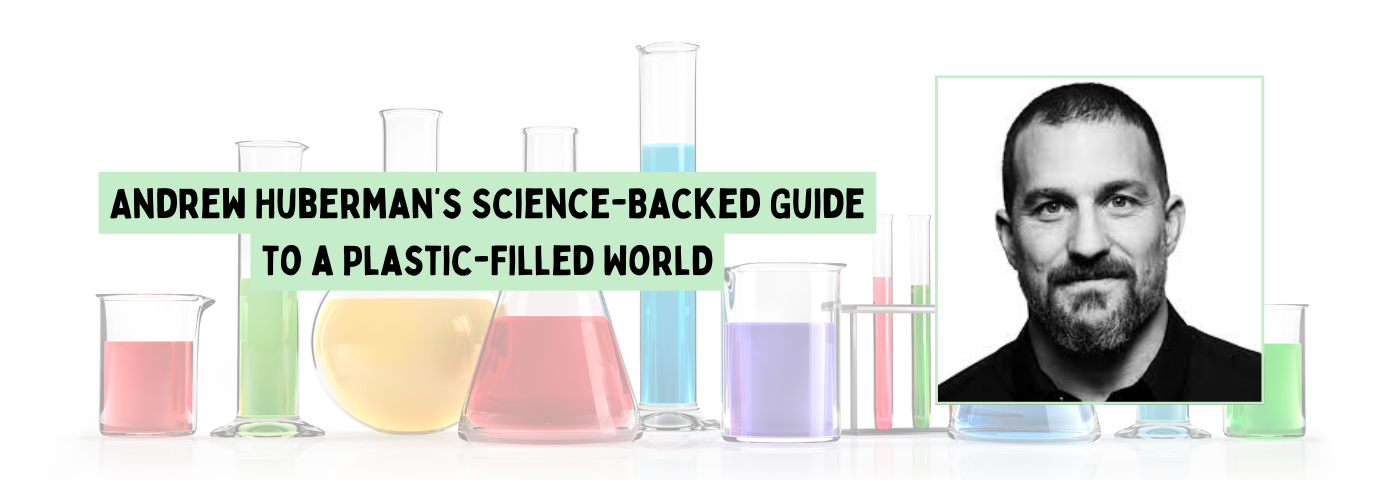
Microplastics Unraveled: Andrew Huberman’s Science-Backed Guide to a Plastic-Filled World
By Sarwan Singh
4 mins
2025-03-27
0
0
Copy Link
Microplastics Unraveled: Andrew Huberman’s Science-Backed Guide to a Plastic-Filled World
Stanford neuroscientist Andrew Huberman explores the tiny plastics invading our bodies, their potential risks, and how to fight back—without losing your mind.
What Are Microplastics?
Dr. Huberman defines microplastics as tiny plastic bits ranging from 1 micron (1/1,000th of a millimeter) to 5 millimeters, with even smaller nanoplastics dipping below 1 micron. They're in bottled water, sea salt, canned soup—even the air we breathe.
"Wherever people look for microplastics, they find them," he says, citing their presence in everything from ocean depths to human tissues. Since the 1950s plastic boom, these durable, non-biodegradable materials have exploded across our world—and into us.
Huberman busts a myth you might've heard: we don't swallow a credit card's worth of plastic weekly. Early studies claimed 30,000 particles per liter in bottled water, but a 2024 Proceedings of the National Academy of Sciences paper, using sharper imaging, pegged it at 240,000 particles per liter on average. That's a jump from overestimation fears to a stark reality— microplastics are more abundant than we thought.
The Negative Effects: What Research Says
Here's where it gets unsettling. Dr. Huberman notes microplastics and nanoplastics lodge in every organ—brain, testes, ovaries, liver, lungs, even placentas and newborn stool. They sneak past protective barriers like the blood-brain and blood-testes barriers, designed to shield our most vital tissues. Why care? Correlative data (not causal yet) links them to health risks:
- Gut Health: A 2021 Environmental Science & Technology study found higher microplastic levels in stool from people with irritable bowel syndrome (IBS). Huberman cautions it's unclear if plastics cause IBS or if IBS folks retain more—but it's a red flag.
- Hormone Disruption: BPA (bisphenol A), BPS, and phthalates—chemicals in microplastics—are endocrine disruptors. A study Huberman cites shows phthalates correlate with lower testosterone in men, women, and kids, especially ages 40–60. BPA in canned soup spikes urinary levels 1,000% after five days, per a crossover trial.
- Heart Risks: A 2024 New England Journal of Medicine study found polyethylene microplastics in 58% of carotid artery plaques, hinting at cardiovascular trouble. Jagged particles in plaques could clog arteries, though causation's unproven.
- Forever Chemicals: PFAS (perfluoroalkyl substances) in microplastics linger as "forever chemicals," tied to liver and immune damage in animal studies.
Huberman’s take? The data’s messy—correlations abound, but human causation’s shaky. Animal studies show neurological and reproductive harm, yet translating that to us is tricky. Still, finding nanoplastics in fetal tissue rattles him: “That’s concerning enough to act.”
How to Avoid Microplastics
Dr. Huberman's not alarmist—he's practical. "We're not ridding the Earth of microplastics," he admits, but we can cut exposure. Here's his advice, distilled:
- Ditch Plastic Bottles: Bottled water's a microplastic hotspot (240,000 particles/liter). Use glass, stainless steel, or ceramic instead. Tap water has them too, so a reverse osmosis filter (pricey but cost-effective long-term) can strip them out.
- Skip Sea Salt: Ocean-sourced salt's laced with microplastics. Switch to Himalayan or non-marine salt—cheaper and cleaner.
- Avoid Canned Soup: BPA in can linings is a hormone havoc-wreaker. Opt for fresh soup or BPA-free cans (rare, so check labels).
- Rethink Paper Cups: Hot coffee in lined paper cups leeches microplastics and BPA at 37°C. Bring a ceramic or steel mug—some cafes even discount it.
- Cut Packaged Foods: Plastic-wrapped berries or microwave popcorn? Farmers' markets or glass containers beat microplastic creep.
- Wear Clothes Longer: Microfibers from synthetic clothing flood oceans and air. Reuse what you've got—Huberman loves his worn-in tees.
Cleansing Your Body of Microplastics
Can we flush microplastics out? Huberman says they're tough to break down—they lodge in tissues—but we can tackle their toxic hitchhikers (BPA, PFAS). His science-backed tips:
- Eat Cruciferous Veggies: Broccoli and cauliflower pack sulforaphane, boosting liver phase-two detoxification. A few cups daily (lightly cooked) or 5–50 mg supplements (per examine.com) may help clear endocrine disruptors.
- Up Your Fiber: Fruits, veggies, and starches like rice bind lipophilic toxins for bowel excretion.
- Sweat It Out: Saunas, hot baths, or runs in a hoodie trigger sweat, potentially offloading some chemical baggage (not whole plastics). He cites heat exposure's broader benefits too.
Takeaways
"Microplastics are everywhere—in us, around us," Huberman says. The science isn't conclusive on how bad they are, but it's enough to act—especially if you're pregnant or raising kids. His podcast isn't about fear; it's about agency. Small swaps—glass over plastic, fiber over junk—add up. As he puts it, "You have control over the bioaccumulation." So, armed with his insights, why not start today?
Dive deeper with Huberman at The Effects of Microplastics on Your Health & How to Reduce Them and explore Ecoyaan's plastic free and chemical-free range of products at https://www.ecoyaan.com
Related posts

7 mins • 2026-06-02
Climate Change in 2026: What the Data Says, What It Means for India, and What You Can Do
5 mins • 2026-05-20
Filling Up on the Future: What Biofuels Mean for India

6 mins • 2026-04-18
Sustainable Travel Tips: How to Explore the World Without Trashing It

6 mins • 2026-03-31
What Makes Women Stronger: 10 Everyday Swaps for a Better Body and Planet

5 mins • 2026-01-23
The Zero-Waste Bathroom: 5 Easy Swaps to Cut Plastic & Waste
5 mins • 2026-01-21
Top 12 Eco-Friendly Habits to Build in 2026
What do you think?
0
0
Copy Link
to write a comment.