Search for 'Coir Brushes'

4 mins
2025-03-27
0
0
Copy Link
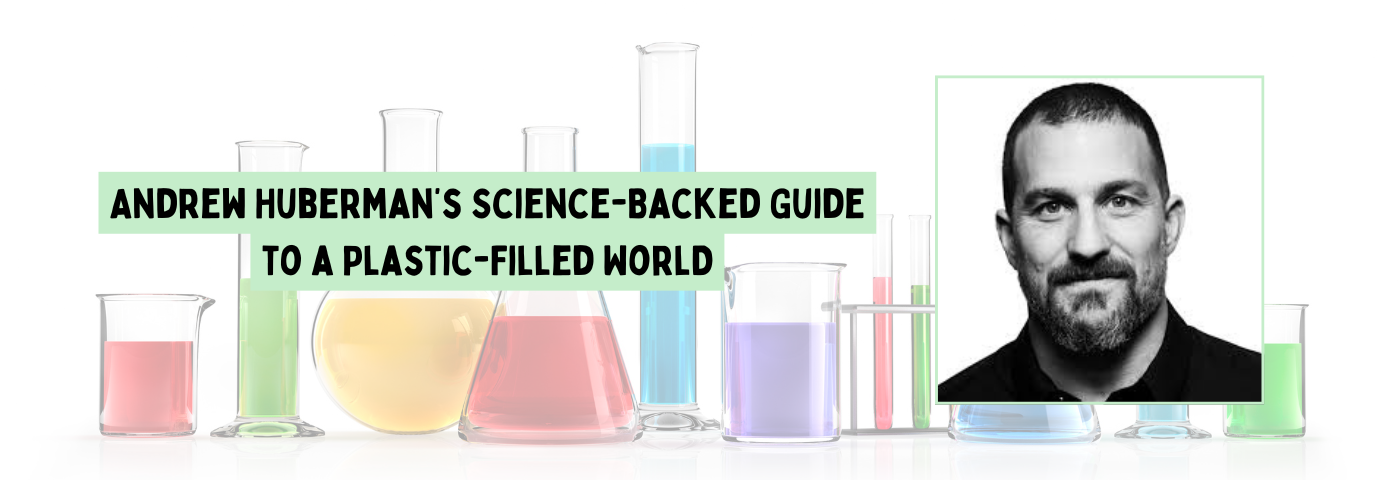
Stanford neuroscientist Andrew Huberman explores the tiny plastics invading our bodies, their potential risks, and how to fight back—without losing your mind.
Dr. Huberman defines microplastics as tiny plastic bits ranging from 1 micron (1/1,000th of a millimeter) to 5 millimeters, with even smaller nanoplastics dipping below 1 micron. They're in bottled water, sea salt, canned soup—even the air we breathe.
"Wherever people look for microplastics, they find them," he says, citing their presence in everything from ocean depths to human tissues. Since the 1950s plastic boom, these durable, non-biodegradable materials have exploded across our world—and into us.
Huberman busts a myth you might've heard: we don't swallow a credit card's worth of plastic weekly. Early studies claimed 30,000 particles per liter in bottled water, but a 2024 Proceedings of the National Academy of Sciences paper, using sharper imaging, pegged it at 240,000 particles per liter on average. That's a jump from overestimation fears to a stark reality— microplastics are more abundant than we thought.
Here's where it gets unsettling. Dr. Huberman notes microplastics and nanoplastics lodge in every organ—brain, testes, ovaries, liver, lungs, even placentas and newborn stool. They sneak past protective barriers like the blood-brain and blood-testes barriers, designed to shield our most vital tissues. Why care? Correlative data (not causal yet) links them to health risks:
Huberman’s take? The data’s messy—correlations abound, but human causation’s shaky. Animal studies show neurological and reproductive harm, yet translating that to us is tricky. Still, finding nanoplastics in fetal tissue rattles him: “That’s concerning enough to act.”
Dr. Huberman's not alarmist—he's practical. "We're not ridding the Earth of microplastics," he admits, but we can cut exposure. Here's his advice, distilled:
Can we flush microplastics out? Huberman says they're tough to break down—they lodge in tissues—but we can tackle their toxic hitchhikers (BPA, PFAS). His science-backed tips:
"Microplastics are everywhere—in us, around us," Huberman says. The science isn't conclusive on how bad they are, but it's enough to act—especially if you're pregnant or raising kids. His podcast isn't about fear; it's about agency. Small swaps—glass over plastic, fiber over junk—add up. As he puts it, "You have control over the bioaccumulation." So, armed with his insights, why not start today?
Dive deeper with Huberman at The Effects of Microplastics on Your Health & How to Reduce Them and explore Ecoyaan's plastic free and chemical-free range of products at https://www.ecoyaan.com
7 mins • 2026-06-02
5 mins • 2026-05-20

6 mins • 2026-04-18

6 mins • 2026-03-31

5 mins • 2026-01-23
5 mins • 2026-01-21
0
0
Copy Link
to write a comment.