Search for 'Coir Brushes'

4 mins
2024-08-22
0
0
Copy Link
2023 was declared the 'International Year of Millets' by the UN's Food and Agriculture Organization (FAO). There are numerous startups in India that are selling millet-based products, touting their nutritional and environmental benefits. Some say it is one of the most sustainable foods for the future. But is this just a temporary craze (like plant-based meats) or can Millet mania stand the test of time?
Firstly, what are millets? According to KSDA, "Millets are a group of small-grained cereal food crops which are highly nutritious. They can be grown under low fertile soils with very low inputs such as fertilisers and pesticides". Moreover, they are rain-fed crops which reduces the dependence on man-made irrigation systems in their cultivation. Millets can also withstand extreme heat - for example, Rajasthan is one of the largest producers of bajra (or pearl millet) in the world. As rainfall and climate patterns become more extreme and unpredictable, we must change our diets and our agricultural practices to adapt to a changing planet. Millets can shine in that transition, providing climate resilience and ensuring food security for billions.
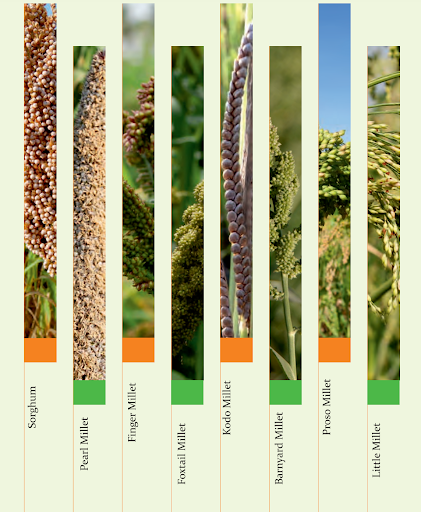
Image courtesy Karnataka State Department of Agriculture
Archaeological records suggest that millet cultivation first started in Northern China, nearly 7500 years ago. Later, nomadic tribes spread these crops to Central Europe, Southeast Asia, India and Africa, where they became a staple food for millions of people. According to Martin Jones of Cambridge University, "Millets make a perfect bridge between nomadic life and settled agriculture because they have a very short growing season - just 45 days, compared to 100 or more for rice - and need very little attention, ideal for nomadic horsemen on the go." That's why millets spread so rapidly across Europe and Asia. Just like the 'low-input' nature of millet cultivation proved beneficial in ancient times, those same attributes can prove to be invaluable in a future where dwindling water resources, worsening soil quality and increasing temperatures may become the new normal.
After thriving for millennia, millet production declined during the British occupation of India, as wheat and other non-food crops (like cotton, indigo, and opium) were prioritised due to their commercial appeal. Millets just fell out of favour around the world, eventually getting downgraded as animal fodder in many countries. According to Dr. Navendu Shekhar of JNU, "After the Industrial Revolution, the British needed cotton to feed their rapidly growing cotton-textile industries, and India became a vital source of raw cotton. This led to a shift in agricultural practices, with farmers focusing on producing crops that could bring commercial cash gain to the British in the European or American markets." Smallholder farmers who once used to produce millets for their own community had to start growing wheat and cotton instead to stay competitive. This trend continued after India's independence as millets could not compete with high-yielding and GMO varieties of wheat, corn and rice.
Thankfully, millets are going through a resurgence, particularly in India and Africa. Since India declared 2018 as the National Year of Millets, the popularity of these wonder grains has skyrocketed. FAO's endorsement in 2023 also increased the international appeal of millets. Here's a graph showing the relative number of google searches of the word 'millet' over the last two decades.
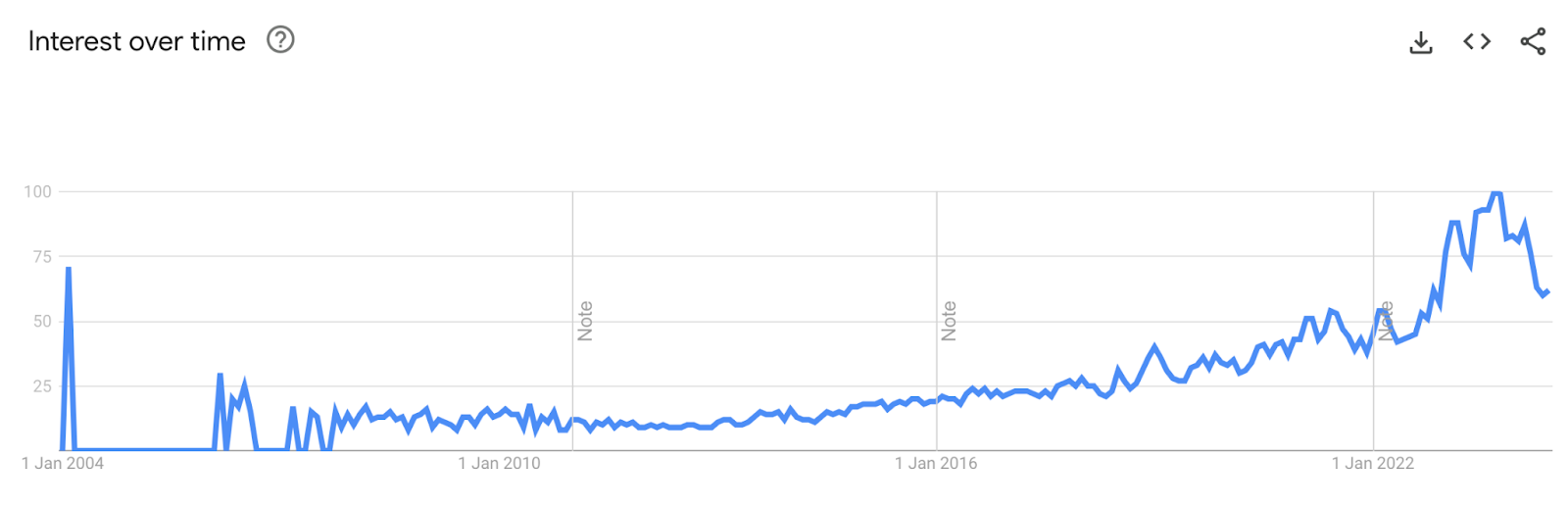
Instances of Google search for the keyword "Millet", courtesy of Google Trends
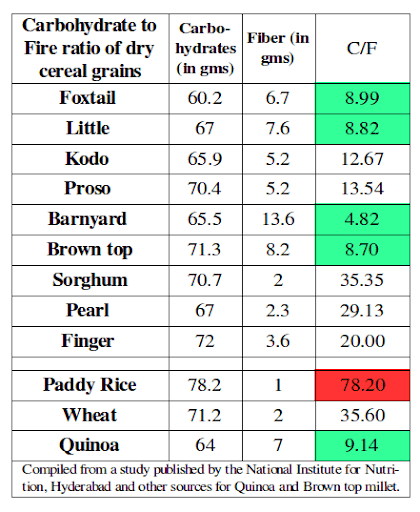
According to a joint study by KSDA and ICMR, 'Millets have many nutritional, nutraceutical and health-promoting properties, especially the high fibre content; the nature of starch in millets has a major role in reducing the risk of diabetes and other related diseases. Indeed millets act as a prebiotic feeding micro-flora in our inner ecosystem. Millet will hydrate our colon to keep us from being constipated. The high levels of tryptophan in millet produce serotonin, which is calming to our moods. Niacin in millet can help lower cholesterol. Millet consumption decreases triglycerides and C-reactive protein, thereby preventing cardiovascular disease. All millet varieties show high antioxidant activity. Millet is gluten-free and non-allergenic'. Diabetes is one of the biggest health crisis facing our nation today. Foods that are rich in fiber typically release glucose slowly into our bloodsteam, making us feel satiated for longer. Many varieties of millets (see chart below) have a low carbs/fiber ratio, making them a great choice for people who are trying to lose weight or those who suffer from diabetes.
Millets offer a fascinating glimpse into our culinary past, while also holding the potential to shape a healthier and more sustainable future. So, are millets a temporary craze? No, quite the contrary. The drop in millet consumption over the 19th and 20th centuries will probably seem like a temporary blip in the rich legacy of this amazing family of crops.
From boosting your health to helping the planet, there are countless reasons to add millets to your diet. And we all have a role to play in this 'movement'. All types of millet flours are readily available in the Indian market - bajra, jowar, ragi, kangni; many companies are selling pre-mixed millet mixes for making pancakes, dosas and cakes (caution - read the ingredients list carefully). There are countless millet recipes online, including Millet Biryani , Millet Poha and many more. The road to a sustainable, healthy diet starts by incorporating more millets into your diet - the future generations will thank you!
7 mins • 2026-06-02
5 mins • 2026-05-20

6 mins • 2026-04-18

6 mins • 2026-03-31

5 mins • 2026-01-23
5 mins • 2026-01-21
0
0
Copy Link
to write a comment.