Search for 'Coir Brushes'

6 mins
2024-11-28
0
0
Copy Link
To do anything useful, we need energy. In the early 20th century, Albert Einstein discovered the law of conservation of energy, which states that energy cannot be created or destroyed. It can only be transformed from one form to another. Everything you see around you can be traced back to the energy from the sun - cars, homes, food, etc. Before the invention of photovoltaic cells (used in solar panels), the only way to harness solar energy was via photosynthesis. All life on our planet can thank phytoplankton and green leaves for their existence! Fossil fuels (oil, coal, gas) are also made up of ancient plants and animals that were storing the sun’s energy for millennia before we humans started digging them up.
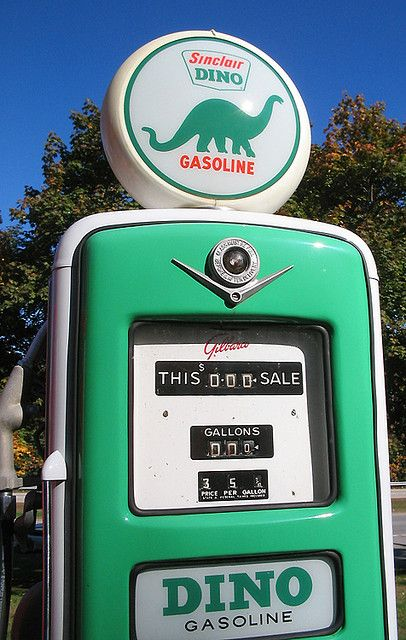
Some companies take their product’s origins very seriously!
Three-fourths of all global greenhouse gas emissions can be traced back to the energy sector. Energy is used in factories, transportation, or cooling/heating our homes. So, no country can meet its net zero targets without decarbonising its energy sector. That’s why renewable sources of energy are getting so much attention worldwide.
Unlike the Middle East, India does not have vast reserves of oil and gas. We do, however, have an abundant supply of coal. So, naturally, we have relied on burning coal to meet the energy demands of over one billion people. Despite these reserves, we are still forced to import even more coal to meet our energy needs.
Crude oil is mainly used as fuel in the transportation sector. Moreover, all plastic products are essentially made of oil. Since India has very little oil within its borders, we are forced to import most of it from the Middle East, Africa and the Americas.
Natural gas is a key component in producing synthetic fertilisers; natural gas is also used for cooking, particularly in urban areas. India does have some domestic supply but imports make up nearly 50% of our gas demand.
You will notice in the bar chart below that ‘Biofuels and Waste’ makes up a significant portion of our energy demands. Although Biofuels are considered renewable because they are made up of sugarcane (and some other plants like corn) that can be cultivated and harvested year after year, there are other significant challenges with scaling up biofuel production. We will cover that in a future article. Wind and solar make up a tiny portion of our energy supply today, but it is growing rapidly. Hydropower is one of the original renewables, but over-engineering our rivers (for irrigation or creating dams) can lead to catastrophic natural disasters like the Pakistan floods of 2022.
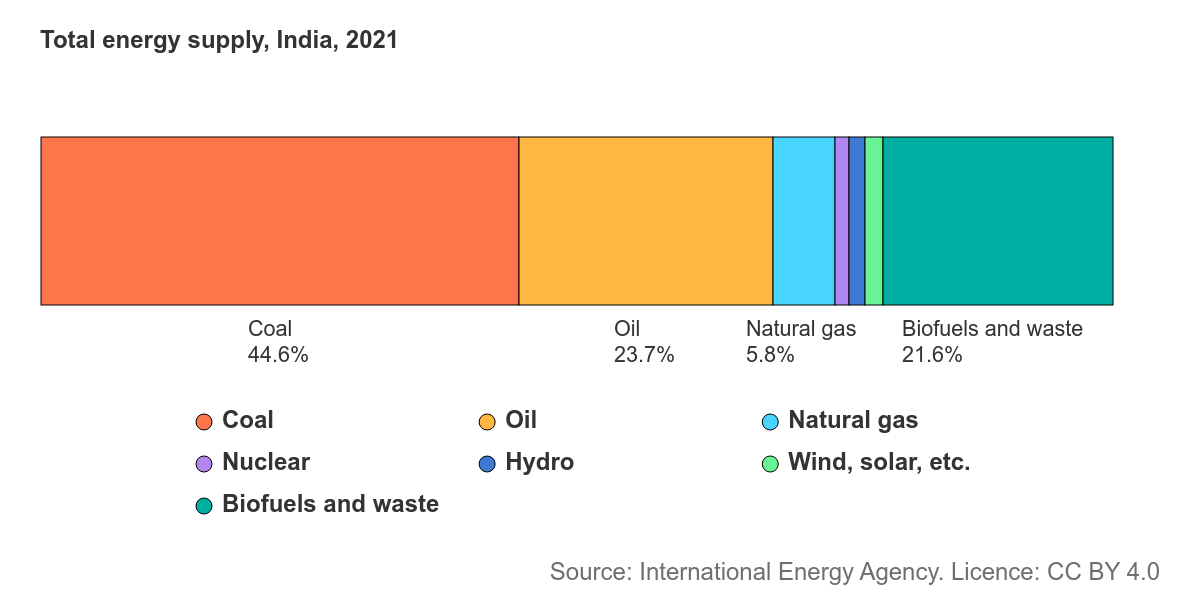
According to IEA , 34% of India’s energy needs are met by importing oil, gas and coal. Oil imports account for more than half of all our fossil fuel imports. Most of our oil was imported from the Middle East in 2021. The share of oil imports from Russia was ~2% in 2021, however, India’s imports of oil from Russia increased tenfold in 2022 because Russia discounted its oil to finance its invasion of Ukraine. Now, Russia is the second largest supplier of oil to our nation, behind Iraq.
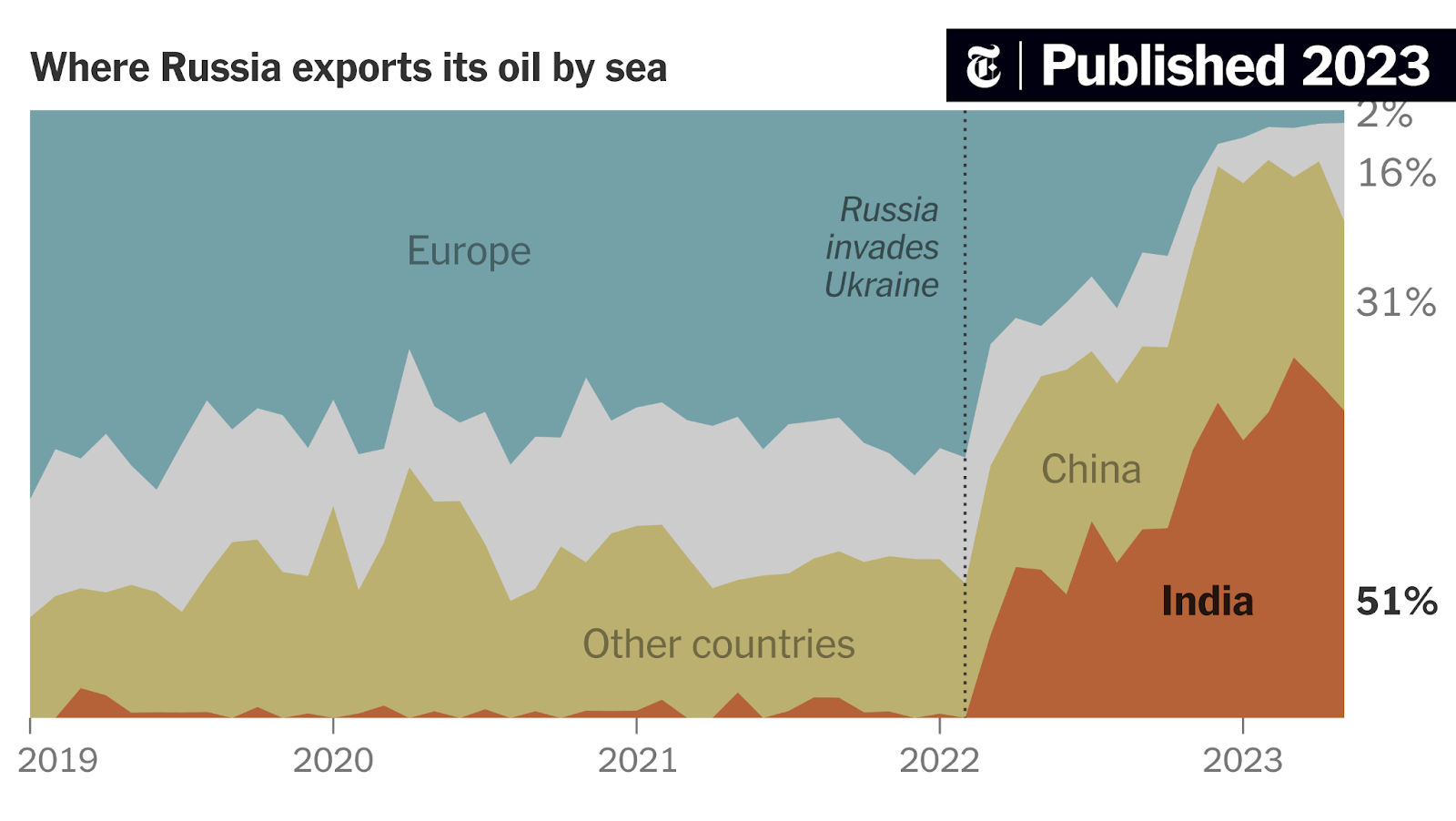
Source: The New York Times
Two-thirds of our coal imports came from Australia and Indonesia in 2023. Most of our natural gas imports, in the form of LNG, are supplied by USA and UAE. India is currently working with Turkmenistan, Afghanistan and Pakistan to build a new gas pipeline. As you can see, we depend on countries all around the world from the US to Australia, from the Middle East to Russia, and from Indonesia to Africa to supply energy to power our developing economy. On the one hand, this demonstrates how India has forged strong ties with many nations globally, but on the other hand, relying on imported energy is also concerning, particularly when we consider that our energy import dependence is projected to go up over the next decade. You may ask, why is domestic energy production so critical for our long term security?
Importing energy is like powering your home with the neighbor’s solar panels. Even if you are paying your fair price for it, what happens when the neighbor purchases an EV and needs the extra energy for charging their car? Things are a lot more complicated at the global scale, but you get the point.
For example, the escalating tensions in the Middle East could cripple our oil supply. Or, if international sanctions were announced on Russian oil (similar to sanctions on Iran in the 2010s), it could put us in a precarious diplomatic position. Just look at what happened in Europe in 2022. In 2022, Germany imported 72% of its energy demand. After Russia invaded Ukraine in 2022, Germany had to make a tough decision. Do they keep buying natural gas from Russia, indirectly funding their war efforts or do they stand united with their Western allies? As the International Trade Association or ITA writes, “The total volume of natural gas imported into Germany in 2022 was 1,449 TWh. The largest volumes came from Norway (33%) and Russia (22%). Russia’s share was 52% in 2021.” Germany also imported over 25% of crude oil from Russia in 2022. For reference, energy imports only account for 6% of the total demand in the United States.
Coal, oil and gas reserves are finite non-renewable resources. Since India is not as lucky as Iraq or Saudi Arabia which have vast amounts of oil reserves, the only way for us to build energy security is by scaling up the renewable energy sector. Biofuels are a great step in that direction, but that sector is also fraught with challenges (which we will cover in the future). To ensure our future generations have a dependable, reliable source of energy, we need to rapidly increase the domestic production and adoption of nuclear, wind and solar.
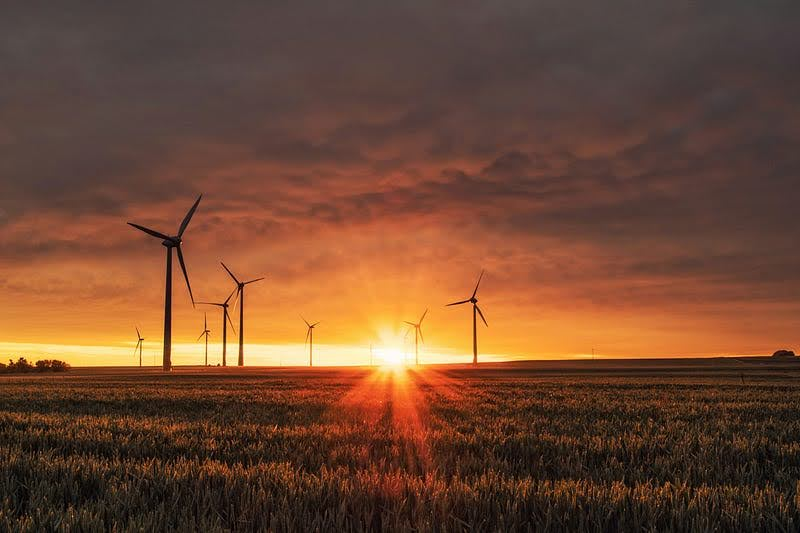
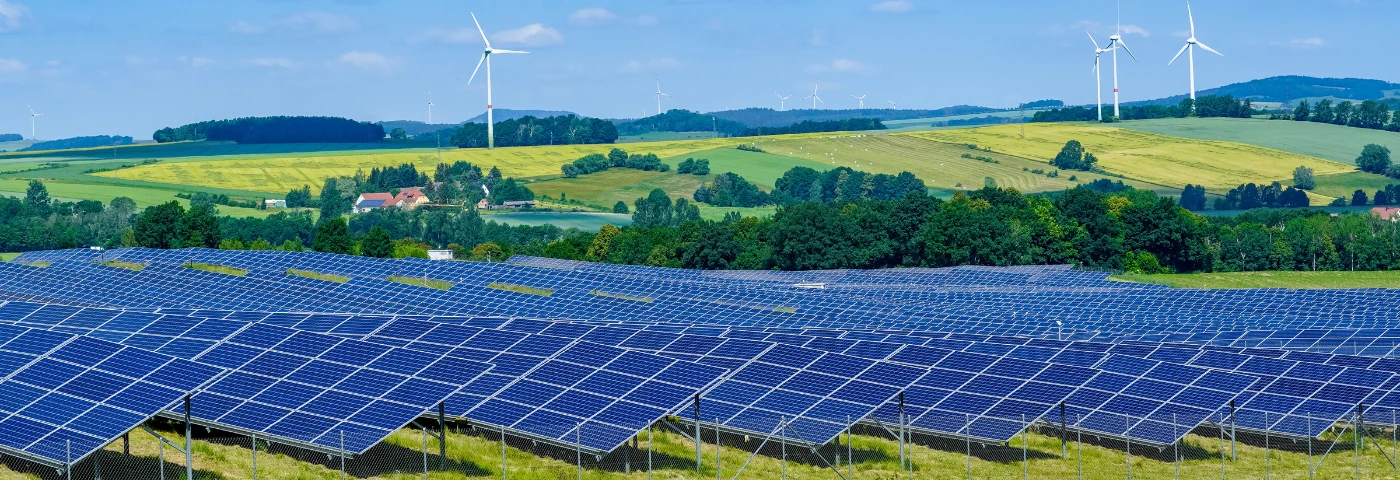
Photo by Karsten Würth on Unsplash
Harnessing the sun’s energy using windmills and solar panels is the cheapest and cleanest way to power humanity’s future. This option was not available two decades ago. We don’t need to unearth decaying dinosaurs anymore! So, if you want to help in India’s transition to renewables and ensure energy security for your kids, and if you have the means, please install solar panels on your roof, on your farm or at your office. Convince your ‘Resident Welfare Association’ to install solar on top of the apartment building. Campaign for it at your workplace - ping your manager or your VP. Reducing your energy consumption is also a great way to contribute - run your washer when it’s full, dry your clothes in the sun and keep your AC thermostat setting at 24C. Every step matters.

7 mins • 2026-06-02
5 mins • 2026-05-20

6 mins • 2026-04-18

6 mins • 2026-03-31

5 mins • 2026-01-23

5 mins • 2026-01-21
0
0
Copy Link
to write a comment.