Search for 'Coir Brushes'

6 mins
2024-11-14
0
0
Copy Link
In a recent study, researchers found that a decline in the vulture population in India has resulted in hundreds of thousands of human deaths. A painkiller commonly given to cattle was inadvertently being ingested by these vultures when they would devour the carcasses of cows. This painkiller turned out to be lethal for these mighty scavengers. As BBC reports, “The authors estimated that between 2000 and 2005, the loss of vultures caused around 100,000 additional human deaths annually, resulting in more than $69bn (£53bn) per year in mortality damages or the economic costs associated with premature deaths. These deaths were due to the spread of disease and bacteria that vultures would have otherwise removed from the environment.” Humans are playing god with the natural world, with catastrophic consequences. We need a thriving ecosystem not just for the sake of our planet, but for the sake of our species.
“Humanity has become a weapon of mass extinction. … And ultimately, we are committing suicide by proxy.”- UN Secretary-General António Guterres
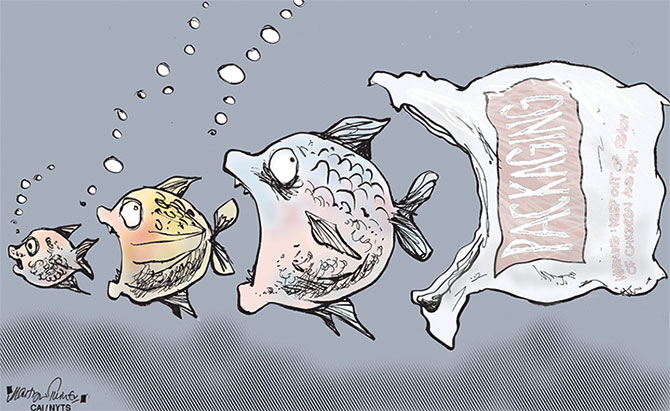
Source: CAI, New York Times Syndicate
Our world comprises millions (or rather billions) of working components. These components are connected in ways our minds can not comprehend and our scientific instruments can not always measure. When we tinker with even a small component of the system (like giving painkillers to cattle in the example above), we can involuntarily end up hurting other parts that make up our complex world. Humans may be at the top of the food chain, but we must understand that it is still a food ‘chain’ - if any part of this calorie pyramid starts falling apart, the whole ecosystem may come crumbling down.
Currently, biodiversity loss is being caused by two factors, global warming and deforestation. Some creatures (like coral reefs and bees) are not adapted to the increasing land and ocean temperatures. Secondly, clearing forests for grazing animals and for growing food for livestock is destroying the natural habitats of thousands of animal and plant species that have thrived in these jungles for millennia.
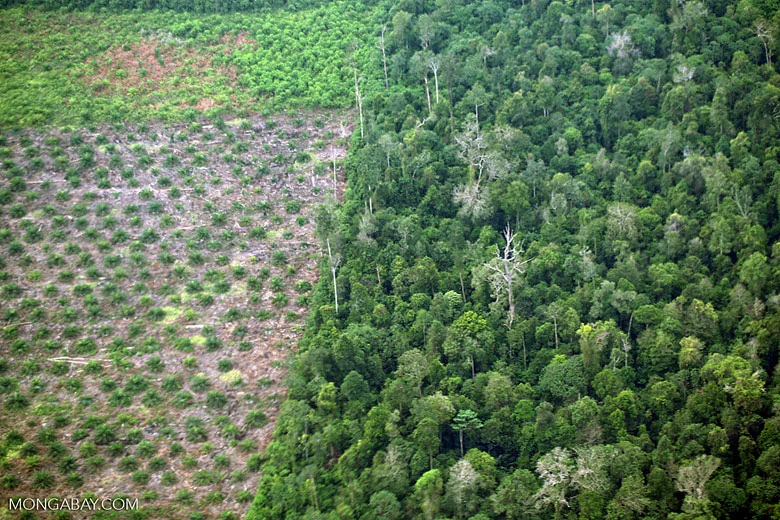
Palm plantations (left) and Indonesian forests (right). Where do you think plants and animals thrive? Image courtesy Rhett A. Butler at Mongabay.com
In 2009, a team of researchers devised the ‘planetary boundaries framework’ to measure the state of Earth’s systems necessary for supporting life. Netflix even made a feature-length documentary featuring Sir David Attenborough based on this research study. Their recent 2023 update shows that ‘Biosphere integrity’ is in the ‘High-risk zone’. According to the researchers, “Of an estimated 8 million plant and animal species, around 1 million are threatened with extinction, and over 10% of genetic diversity of plants and animals may have been lost over the past 150 years. Thus, the genetic component of the biosphere integrity boundary is markedly exceeded”. This is deeply concerning, particularly when you realise how much we depend on the natural world for our survival.
“The nine planetary boundaries presented in the framework are argued to be fundamental in maintaining a safe operating space for humanity” - Stockholm Resilience Centre.
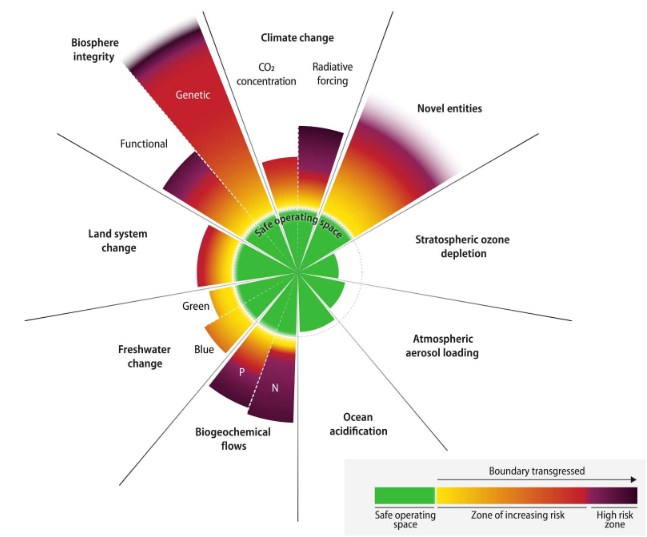
Source: https://www.science.org/doi/epdf/10.1126/sciadv.adh2458
Well, this is the most basic one. Last we checked, we humans are not able to photosynthesize. We rely on plants on land and on plankton in the ocean to convert the sun’s energy + CO2 into a form suitable for human consumption. So, making sure we allow the right conditions for these creatures to photosynthesize should be the #1 goal for our species. Unfortunately, things are not looking good. Gourmet food items like salmon, coffee, wine, and chocolate may be the first to go, as beautifully explained by a couple of chefs in a meal they call ‘The Last Supper’.
Worldwide, between 50,000 and 80,000 flowering plants are used medicinally. In the United States, of the top 150 prescription drugs, at least 118 are based on natural sources: 74 percent come from plants, 18 percent from fungi, 5 percent from bacteria, and 3 percent from vertebrate species such as snakes or frogs (Ecology Society of America, 1997). 70% of all cancer drugs today are natural or bio-inspired products. Many of these medicinal plants are in danger due to extreme weather events all around the globe. According to a 2021 research paper by BHU Varanasi, “Ayurveda has greater than 90 percent of plant-based formulations, which not only has herbal formulations for general health and wellness, but also curative and preventive properties against different types of diseases (Ravi, and Bharadvaja, 2019). According to a survey conducted by WHO in 2019, around 80-99 percent of the world's population depends on the indigenous system of healing and traditional medicines across the world (WHO 2019, n.d.)”. A lot of these medicinal plants and mushrooms are in danger due to the adverse effects of climate change and deforestation.
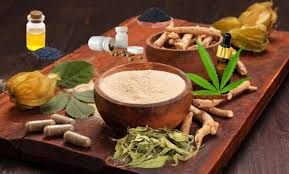
Source: Saatwika Ayurveda
Most flowering plants rely on bees for pollination (or reproduction). Air pollution, light pollution, and global warming are all contributing to a steep drop in bee and pollinator numbers around the world. According to the National Conference of State Legislatures (NCSL), between $235 and $577 billion worth of annual food production globally relies on the direct contribution of pollinators. In 2017, there were 2.88 million honey bee colonies in the U.S., down 12% from the 3.28 million colonies in the country in 2012. Honey bees are one part of the puzzle, overall countless bee species pollinate our crops. According to another study (link), a quarter of all known bee species haven’t been seen since the 1990s. Just like we can not photosynthesize, humans can not possibly do the job of these hard-working flies at the scale required to feed eight billion people.
“If we kill something in the ecosystem, we inherit it’s job” — Anonymous
A couple of hundred years ago, we began ploughing the land using new industrial-scale machinery, in order to suppress weeds. Unfortunately, this disturbance of the intricate soil ecosystem destroyed fungal networks and other microbial activity underground. Later on, to improve yields further, we started adding synthetic fertilizers and spraying poisonous pesticides, which completely decimated all life in the soil. To deal with the lack of a soil ecosystem, we also developed genetically modified (or GMO) crops that are engineered to excel in this new chemical-based agricultural system. Although these GMO crops have not been shown to have any negative effects on human health, the fact that such crops can not be grown without excessive use of fertilizers, pesticides, and fungicides results in guaranteed soil biodiversity loss. Ironically, this model of agriculture became known as the ‘Green Revolution’. As the soil loses its microscopic inhabitants, it becomes more prone to erosion and more sensitive to the worsening climate. Some senior officials have even suggested that if we don’t change our agricultural system, Earth’s soils may only be able to support another 60 harvest cycles . Even though the claims of such studies are being questioned , even if the estimates are off by 2x, it is still deeply concerning.
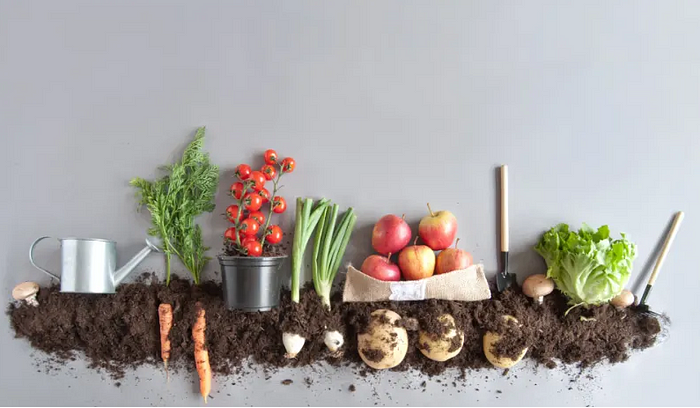
Food starts below the ground. We need to take care of the soil. — Image courtesy Pixelbliss/Shutterstock
Hopefully, after reading this article, you will have a better appreciation for the role of all living things in maintaining habitable conditions on our planet. Our impact on the planet goes well beyond the 1.5 or 2 degC warming metric that we come across most often in the media. We are altering the building blocks of life on our planet. You can change that by living sustainably. Follow us for more articles on climate change and sustainable living.
7 mins • 2026-06-02
5 mins • 2026-05-20

6 mins • 2026-04-18

6 mins • 2026-03-31

5 mins • 2026-01-23

5 mins • 2026-01-21
0
0
Copy Link
to write a comment.