Search for 'Coir Brushes'

4 mins
2024-10-17
0
0
Copy Link
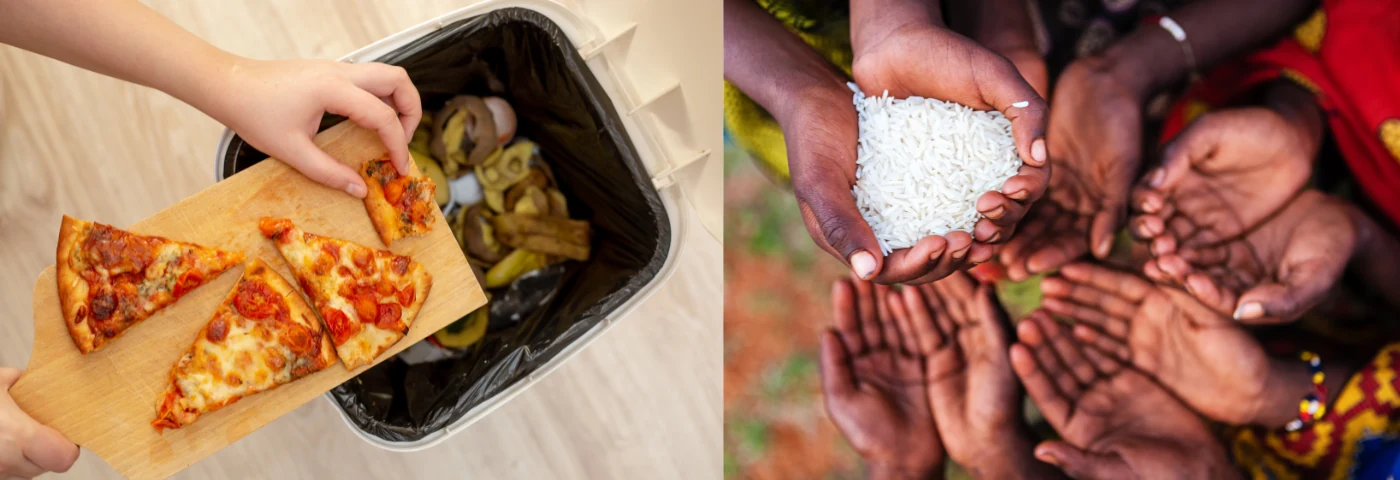
A blue-collar job is a manual labour or trade-related job that doesn't involve working in an office. Chances are, you cross paths with at least half a dozen of these workers daily. The sweepers at your work, the construction workers near the mall, or a house-help at your home. These unsung heroes of our modern hi-tech society keep the world running around us but rarely get the credit they deserve. Moreover, being among the lowest earners, blue-collar workers (or blue-sari workers!) typically emit 10 to 20 times less CO2 than the uber-rich. So, what makes their lifestyle more sustainable than the rest of us?
To find out more, we decided to interview a house-help who works on the outskirts of Hyderabad. The interview was conducted in Hindi, but I have translated the answers into English for this article.
Me:Can you tell us about yourself?
Renuka:My name is Renuka. I work as a house helper in Hyderabad. I am originally from a village called Mehboobnagar, near the Maharashtra-Telangana border. My husband works in a tile manufacturing company and we recently moved to Hyderabad in search of better-paying jobs. I have two kids, a boy and a girl. They are both enrolled in school.
Me:Do you know about climate change?
Renuka: What is that? I do not know that word.
Me:In Hindi, it is known as ‘Jalvaayu Parivartan’. Have you heard about it?
Renuka: Sorry, I am not aware of this concept.
Me:Whatever we produce, wherever we travel, when we use the AC, when we buy clothes, we release gases in the atmosphere that are heating the planet. Have you heard anyone talking about this?
Renuka: Over the last 5-6 years, we have experienced very hot summers. The elders in our village say that the worsening weather and crop yields are happening because of our sins. Ladies can not roam around freely and bad things are happening all around. If we do wrong to others, we will have to pay the price for our actions.
Me:What do the village elders say about living a sin-free life?
Renuka:If I alone try to do anything, it will have no impact. Society should be more respectful, and compassionate with one another. The way you and your wife talk to me and treat me like your sister. Rich people need to let go of their pride and treat poor people with humanity. We all walk the same roads and we will all go back to the same Earth after dying. When God made some people wealthy, it was with the intention that the wealth be shared with everyone. If they do not do their duty, people like us will never be able to succeed and live a happy life. If a family has issues, people help each other out; we are all one big family, so helping one another is the only way to reduce the sins of our society.
Me:So, greed and pride lead to overconsumption and at the same time income inequality. People want bigger houses, bigger cars, private jets...
Renuka:This happens because of external influence. If a movie is released and the actors are shown to have fancy cars and houses, it ends up influencing the minds of our society. What it means to be wealthy is shaped by the media. Movies should try to portray a different genre of affluent living, one where people are more compassionate and caring as they get rich. Then society will start to model their lives and change their aspirations accordingly.
Me:What do your parents do in the village? Do they see decreasing crop yields over the last few years?
Renuka:Farming is a difficult business. We are always at the mercy of the weather. We’ve always had some flooding, some heatwaves, but these days the climate forecast industry is causing a lot of confusion. Sometimes forecasts say that there will be rain but we don't get a drop of water for weeks. Other times a dry month is forecasted but we get record rains. Rumors spread so easily online, YouTube is available so easily, particularly to kids.
Me:How do you deal with heatwaves?
Renuka:We have a fan. During really hot days, we use an air cooler. We don’t have money to purchase an air conditioner. Sometimes, on the hottest days, we clean the floor with cold water and sleep on the ground.
Me:How do you come to work every day?
Renuka:I walk. It’s a 30-minute walk. Sometimes if I am running late, my husband drops me on a motorbike.
Me: I am asking because walking has no carbon emissions. Cars are the worst emitters in daily life and even though bikes do emit CO2, they are much better than cars. Planes are the worst and people who fly a lot end up worsening all of our lives.
Renuka:Is that why the temperatures are getting worse during summer?
Me:Yes, because we don't see these emissions, we don't realize the harm they are causing to all living creatures on Earth. You may have seen greenhouses in your village for growing food; we are covering the whole planet in a greenhouse when we release smoke into the air. For growing food, this effect at a small localized scale can be beneficial, but when it happens to the whole planet, it is very harmful to us all. Going back to your daily life, how often do you purchase clothes?
Renuka:I make all the clothes of our family. I fix any torn clothes so that we can stretch the life of these clothes longer.
Me:What about household appliances?
Renuka:We try to find a mechanic to repair malfunctioning appliances. We don't have the resources to buy a new machine every time there is a glitch.
Me:You had a puja in your home yesterday. Can you tell us what happened during that puja?
Renuka:We cleaned the house. We made something sweet and fed it to the gods. The local spiritual leader went to the river and brought a statue of god back to the village temple. We wore nice clothes, but we did not buy any new clothes for that day. The same aarti plate from last year was used this time as well.
Me:Upon hearing the causes of the worsening climate, what thoughts come to your mind?
Renuka:Wealthy people can live a lavish life and poor folks look up to them for hints on how to be successful. Everyone wants to go on holiday on an aeroplane because that is considered a sign of success. People should travel, and enjoy life, but it should be an occasional event. People should also travel for emergencies.
Me:Do you have a message for people who buy too many things, or travel too much?
Renuka:I don’t like to tell people how to live. If someone gets joy from buying new things, let them do so. If they want to flaunt their money in this way, that is their choice.
Me:Between earning a living and saving the world, what would you prioritise?
Renuka:People like me need to think about money first whereas people like you can think about the planet since you have financial stability in your life. I have to chase money right now to send my kids to school and put food on the table. I have to think about their future. That said, I try to help people who have even less than me, in whatever way I can.
Me:Do you have anything else to say?
Renuka:The world is running ahead, racing ahead. But we should not be caught in this rat race. Everyone seems to be getting more angry at one another. We should stop doing that.
Blue-sari’ workers like Renuka have to deal with the worst effects of global warming, without knowing the root cause of the problem. Sadly, they blame themselves and their so-called sins for a problem caused by the greed of the uber-rich, particularly in the developed world. Her kids' future is in jeopardy because someone in California wants to see Bora Bora during spring break (I was one of those people ten years ago). That makes me sad, but it also motivates me to minimise my environmental impact. I do not want my life choices to hurt anyone. It may be time for you to revisit your choices too.
We thanked Renuka at the end of the interview. As always, she did not have time for chit-chatting and went about her work and her day. The ‘Reduce, reuse and recycle’ lifestyle is embodied by people like Renuka. For her, it's just the way of life driven by economic hardships but for the rest of us who have been exposed to the life of plenty, her lifestyle offers a glimpse into what sustainable living actually means.
7 mins • 2026-06-02

5 mins • 2026-05-20

6 mins • 2026-04-18

6 mins • 2026-03-31
5 mins • 2026-01-23
5 mins • 2026-01-21
0
0
Copy Link
to write a comment.